> For the complete documentation index, see [llms.txt](https://nataliekung.gitbook.io/ladder_code/llms.txt). Markdown versions of documentation pages are available by appending `.md` to page URLs; this page is available as [Markdown](https://nataliekung.gitbook.io/ladder_code/meta-2025/1110.-delete-nodes-and-return-forest.md).
# 1110. Delete Nodes And Return Forest
Tree dfs
Given the `root` of a binary tree, each node in the tree has a distinct value.
After deleting all nodes with a value in `to_delete`, we are left with a forest (a disjoint union of trees).
Return the roots of the trees in the remaining forest. You may return the result in any order.
**Example 1:**
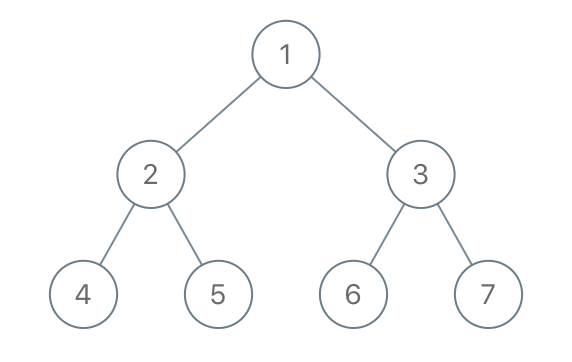
Input: root = [1,2,3,4,5,6,7], to_delete = [3,5]
Output: [[1,2,null,4],[6],[7]]
**Example 2:**
Input: root = [1,2,4,null,3], to_delete = [3]
Output: [[1,2,4]]
**Constraints:**
* The number of nodes in the given tree is at most `1000`.
* Each node has a distinct value between `1` and `1000`.
* `to_delete.length <= 1000`
* `to_delete` contains distinct values between `1` and `1000`.
分析
给定一个二叉树的根节点 `root`,以及一个需要删除的节点值的列表 `to_delete`。你需要删除 `to_delete` 列表中所有值的节点。删除这些节点后,可能会形成多个独立的二叉树(一个森林)。你需要返回这个森林中所有树的根节点列表。
```
from typing import List, Optional
class TreeNode:
def __init__(self, val=0, left=None, right=None):
self.val = val
self.left = left
self.right = right
class Solution:
def deleteNodes(self, root: Optional[TreeNode], to_delete: List[int]) -> List[TreeNode]:
# 用于存储森林中所有树的根节点
forest = []
# 将需要删除的值放入一个集合中,方便快速查找
to_delete_set = set(to_delete)
def dfs(node: Optional[TreeNode], is_root: bool) -> Optional[TreeNode]:
"""
深度优先搜索遍历二叉树,删除指定节点并识别新的根节点。
Args:
node: 当前遍历的节点。
is_root: 一个布尔值,表示当前节点是否是某个树的根节点。
Returns:
如果当前节点被删除,则返回 None;否则返回当前节点。
"""
if not node:
return None
# 判断当前节点是否需要删除
deleted = node.val in to_delete_set
# 递归处理左右子树,并更新当前节点的左右子节点。
# 如果子节点所在的子树的根被删除,那么当前节点指向该子节点的指针会变成 None。
node.left = dfs(node.left, deleted)
node.right = dfs(node.right, deleted)
# 如果当前节点是某个树的根节点(即它的父节点被删除,或者它是原始的根节点且没有被删除),
# 并且当前节点没有被删除,那么它就是森林中的一棵树的根,将其添加到 forest 列表中。
if is_root and not deleted:
forest.append(node)
# 如果当前节点被删除,返回 None,这样它的父节点就不会再指向它了。
# 如果当前节点没有被删除,返回当前节点。
return None if deleted else node
# 从根节点开始进行深度优先搜索,初始时根节点被认为是潜在的根节点 (is_root=True)
dfs(root, True)
return forest
```